


Every construction project runs on a Master Construction Schedule. It is the playbook for every subcontractor on the job, built around tasks that are each assigned a duration and a dependency. When one task cannot begin until another is complete, they are linked. The critical path is the longest sequence of those dependent tasks, and it dictates the shortest possible time to complete the project. Delay anything on the critical path and the entire project moves back. No exceptions.
Why Door Frames End Up on the Critical Path
On concrete masonry projects, the mason drives the schedule. Bearing walls have to go up before floor and roof steel can be set, before metal deck, before roofing and windows. Getting the building enclosed is everything. It is what allows every other trade to work out of the weather.
When building a masonry bearing wall, it is always preferable to set hollow metal door frames first so masonry can be built around them. That dependency puts frame fabrication and delivery directly on the critical path alongside masonry. A delay to the frames is a delay to the whole project.
The problem is that door frames are far more complicated and time consuming than most people on a job site appreciate. Shop drawings require detailed coordination with door hardware, and a large door project involves significant back and forth before fabrication can even begin. That process, coordination, review, revision, approval, fabrication, and delivery all takes time the schedule rarely has. Masonry often has to start without the frames. Openings get left in the wall. Frames go in after the fact, a standard practice known as after set.
Under normal circumstances, after set is a manageable solution. When access control is involved, it becomes a much harder problem.
Three Trades, One Small Opening, No Good Options
When a door frame goes in after set and access control devices are part of the scope, the job site gets complicated fast. The general contractor is setting the frame. The electrician is connecting the conduit pathway. The security installer is trying to work around both of them. Three trades converging on the same frame opening at the same time, with no standard process for how any of it should work together.
Something always gives. Contractors reach for surface mounted conduit because it is fast and it works. On a brand new building, it looks exactly as bad as it sounds. Others fish a bare wire through the frame cavity to avoid the conduit conversation entirely, but that wire cannot be replaced over the life of the building and is one sharp edge away from a callback. Neither option is acceptable on a project anyone is proud of.
How Frame Frog Changes the Install
Frame Frog provides a fully connected wire pathway around the perimeter of the frame that resides entirely within the throat of the frame. The frame slides into the opening without obstruction and gets anchored with anchor bolts, exactly like any standard after set installation. The pathway is already built in. Nothing is exposed and nothing is improvised.
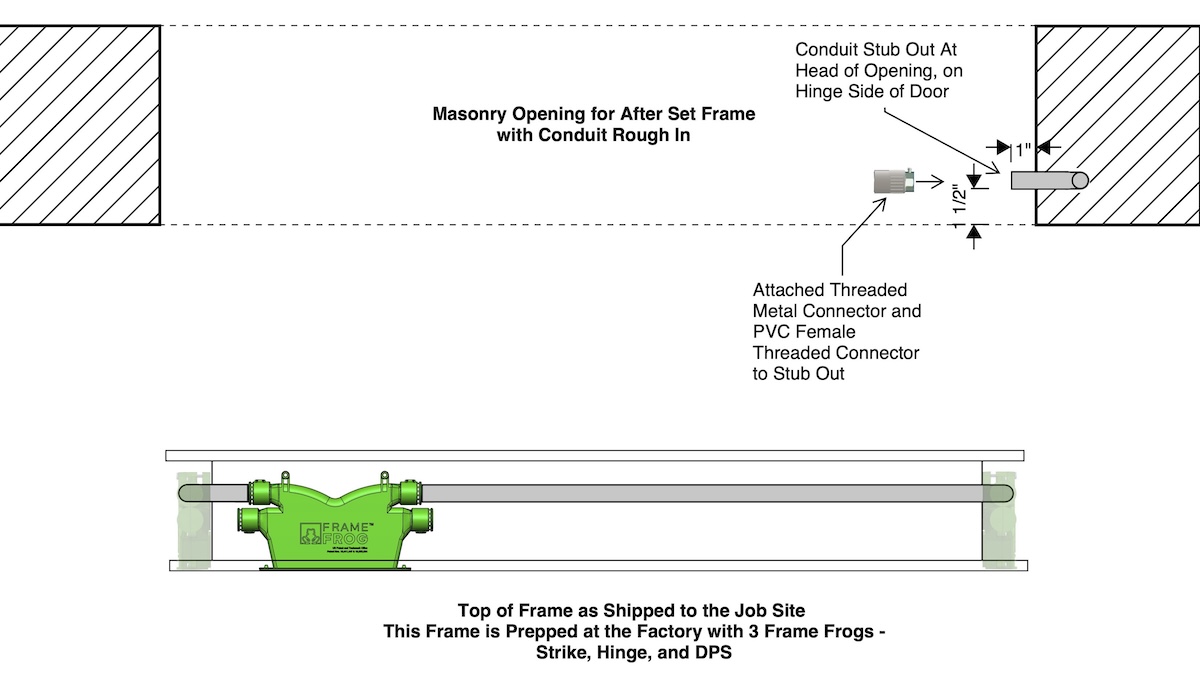
The conduit connection is where the process comes together. While the masonry is being laid, the electrician installs conduit inside the wall running up to above the ceiling. That conduit needs to terminate at a specific location at the opening: extended approximately 1 to 2 inches into the opening, tight to the header, on the hinge side of the door, at the door side of the wall.
Step 1
Step 2
Step 3
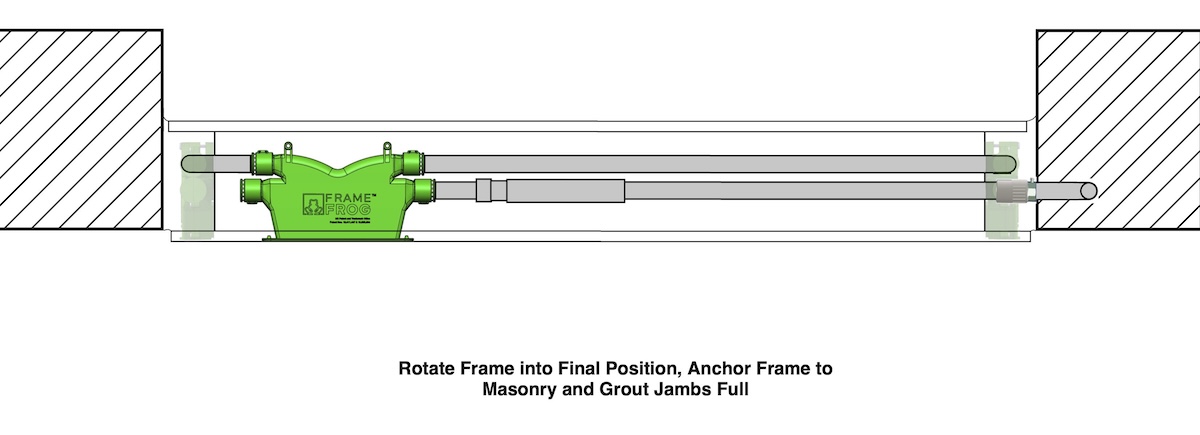
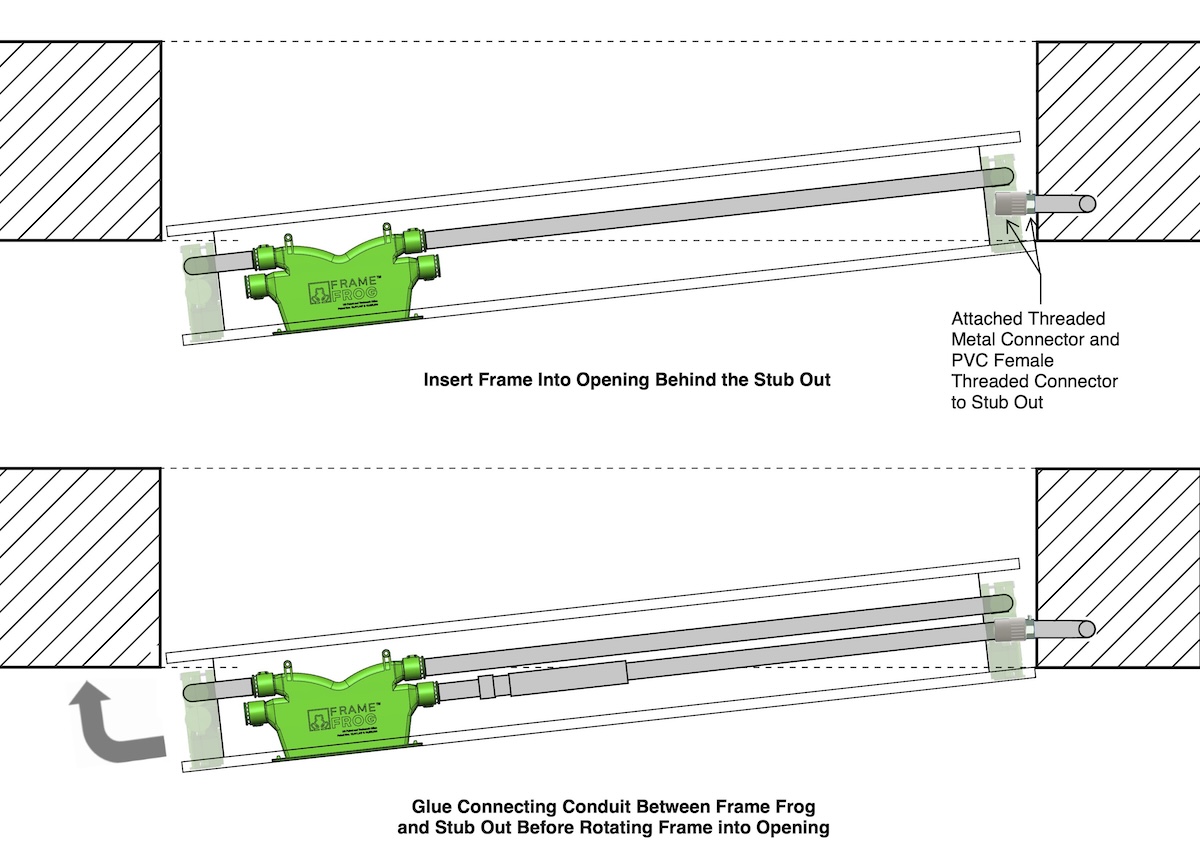
That stub out allows the hinge side of the frame to be set into the opening around it. Before the frame is fully rotated into position, a PVC conduit is placed in the head frame from above, glued to the stub on one end and connected to the Frame Frog on the opposite side of the frame at the door position switch location. The frame then rotates fully under the header and gets anchored at the jambs like any typical after set installation.
No exposed conduit. No wire mold. No three trades tangled up in the same opening. What remains is a fully protected, fishable wire pathway that will serve the building for repairs and upgrades over its entire life. Download the installation guides or watch the installation videos to see the full process in detail. For a closer look at the available configurations, explore the full product lineup.
Nobody Wants Exposed Conduit on a New Build
The after set problem is not going away. Schedules will keep forcing masonry ahead of frames, and access control will keep adding complexity to an already compressed install. The difference now is that there is a solution designed specifically for it.
Frame Frog keeps every trade in its lane, keeps the pathway inside the frame where it belongs, and leaves behind a finished installation that looks and performs the way it should. General contractors navigating tight schedules and multiple trades can find more information on the For General Contractors page. Installers looking for technical guidance can visit the For Installers page. Anyone specifying the solution for the first time can start with the How to Specify Frame Frog guide.
Contact the Frame Frog team or request a demo to get it on your next project.