
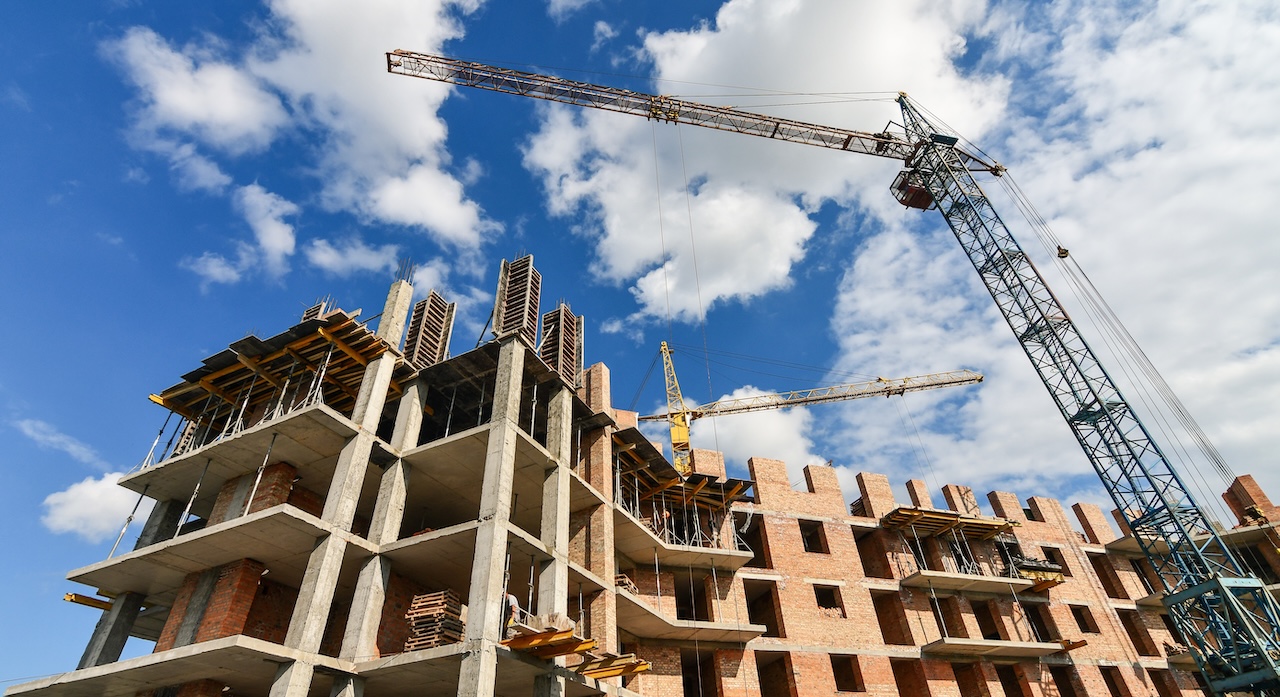

Most access control problems in multifamily buildings don’t start with the hardware. They start months or years earlier, during construction, when wiring pathways through door frames either get planned or get skipped. By the time the problem shows up – a card reader that can’t be added, a lock upgrade that requires opening finished walls, a security change a tenant is waiting on – the easy solution is long gone.
This post is about what that decision looks like, what it costs when it goes wrong, and how to avoid it on the next project.
The Multifamily Problem Is Different in Scale
A missed wiring pathway on a single commercial door is an inconvenience. In an apartment or condo building, that same oversight exists at every unit entry, every common area door, every amenity space, every garage access point, and every stairwell. The number of affected openings turns what would be a one-time fix into a building-wide problem.
Multifamily buildings also face something most commercial properties don’t: continuous occupancy. Tenants are present, common areas are in use, and access control changes don’t happen during a construction window — they happen while people are living there. That changes the cost and the complexity of every retrofit significantly.
Why Retrofitting in a Lived-In Building Costs So Much More
When access control needs to be added or upgraded after construction is complete and walls are closed, the process involves opening up finished surfaces around the door frame, routing new wiring, repairing the wall, repainting, and coordinating all of that around tenant schedules. What sounds like a straightforward upgrade becomes a multi-trade, multi-day ordeal.
According to Frame Frog, retrofitting access control typically doubles the original installation cost. In a multifamily building where dozens or hundreds of openings may need to be addressed, that math becomes significant quickly. The disruption to residents adds another layer of cost that doesn’t show up in a line item but absolutely affects tenant satisfaction and retention.
The root cause in most cases is the same: no wiring pathway was built into the door frame during construction. At the early stage of design and construction, creating a pathway is inexpensive and fast. After the fact, it’s neither.
What Planning Ahead Actually Looks Like
Frame Frog installs directly into the hollow metal door frame during construction, before walls are closed and finishes are applied. Once in place, it creates a permanent conduit pathway for low-voltage wiring up to 30 volts — covering the full range of typical multifamily access control hardware including electronic locks, electric strikes, card readers, and door position switches.
The pathway stays in the frame for the life of the building. When hardware changes, when technology upgrades, or when a new owner wants to modernize the security infrastructure, the conduit is already there. No walls to open, no trades to coordinate, no tenants to work around.
A comparable situation played out at an Ohio high school that installed Frame Frog in 75 door frames during construction in anticipation of future access control needs. Shortly after the building opened, they upgraded every classroom without damaging walls and kept both installation cost and time to a minimum. The logic applies directly to multifamily: the investment during construction is small relative to what it saves later.
What Scalability Looks Like Across a Full Building
A multifamily project might have dozens or hundreds of door openings depending on the size of the building. Frame Frog’s two product sizes cover all hardware types and frame locations, so a single specification handles the entire building without needing to evaluate each opening individually. Frame Frog SHORT handles hardware preps up to 5″ long, while Frame Frog LONG is the right choice for longer devices including electric power transfers.
Frame Frog Prep Kits bundle all the components needed for a complete pathway in one package, which simplifies procurement and installation when you’re working across a large number of openings. Wire installation can be completed by one person per opening, with labor savings of up to 75% and roughly $600 saved per door compared to conventional methods. Across a 100-unit building, that number adds up in a hurry.
A Decision That Reflects on the Building Long After Handover
Multifamily buildings change hands, turn tenants, and face ongoing pressure to modernize. A building with pre-installed wiring pathways at every opening is easier to maintain, easier to upgrade, and easier to market to future buyers or tenants who expect modern access control as a baseline amenity.
For developers, the value isn’t just in what Frame Frog does during construction. It’s in what it prevents afterward: the costly retrofits, the tenant disruptions, the change orders, and the reputation damage that comes from delivering a building that can’t adapt. Specifying Frame Frog at the design stage is one of the lower-cost decisions on a multifamily project with one of the longer payoff windows.
To learn more about how Frame Frog supports developers and property owners, visit the For Developers and For Property Owners pages, or request a demo at framefrog.us/contact-us.